Marketing brief
Goals, audience, and known templates as reference.
AirDNA's marketing site had grown organically over several years. Every new landing page, feature page, or campaign required custom design and development — no shared structure, no reusable components, no consistent patterns across pages.
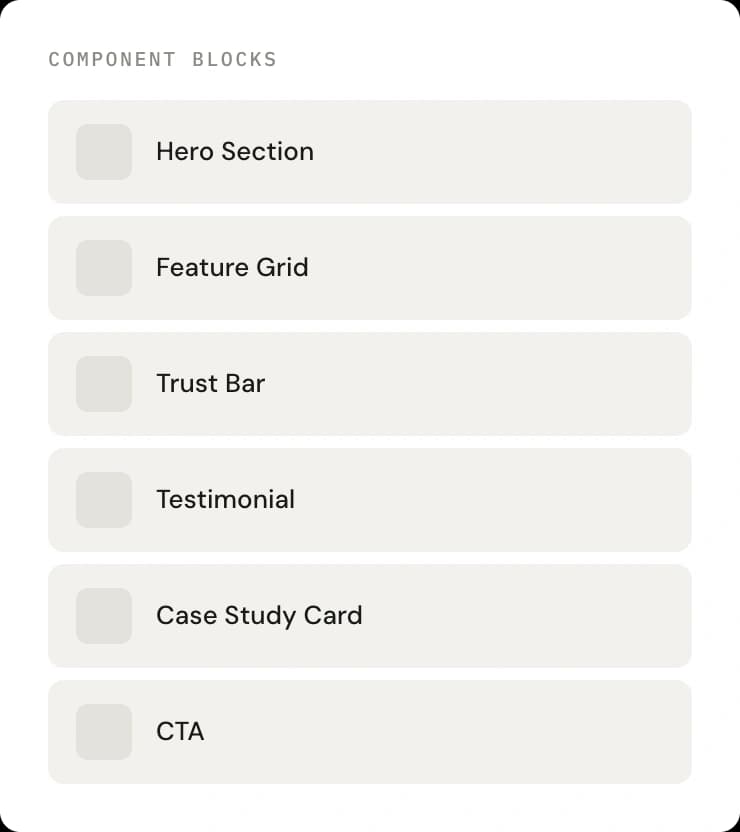
As design lead, I introduced a modular marketing component system — a library of reusable blocks and page templates that could be assembled in Prismic and shipped without custom development. The system covered everything from hero sections and feature grids to testimonial cards and pricing layouts.
The result was a fundamental shift in how the marketing team shipped pages — reducing turnaround from roughly a week to about a day, with consistent quality and brand cohesion across every surface.
Every new landing page, feature page, or campaign was a bespoke effort. Designers built from scratch in Figma. Engineers rebuilt the same patterns from scratch in code. A single page could take a week to ship, and when it finally did, it rarely matched the page shipped the month before.
The marketing team felt the cost every week. Launches slipped. Brand cohesion drifted. Engineering cycles that should have gone to net-new work were spent re-implementing heroes, feature grids, and CTAs that already existed somewhere else on the site.
What should have taken a day was taking a week — and every page looked different.
The system was a library of component slices — self-contained building blocks for marketing pages. Each slice owned its layout, content model, and responsive behavior, and every slice was designed to compose cleanly with any other.
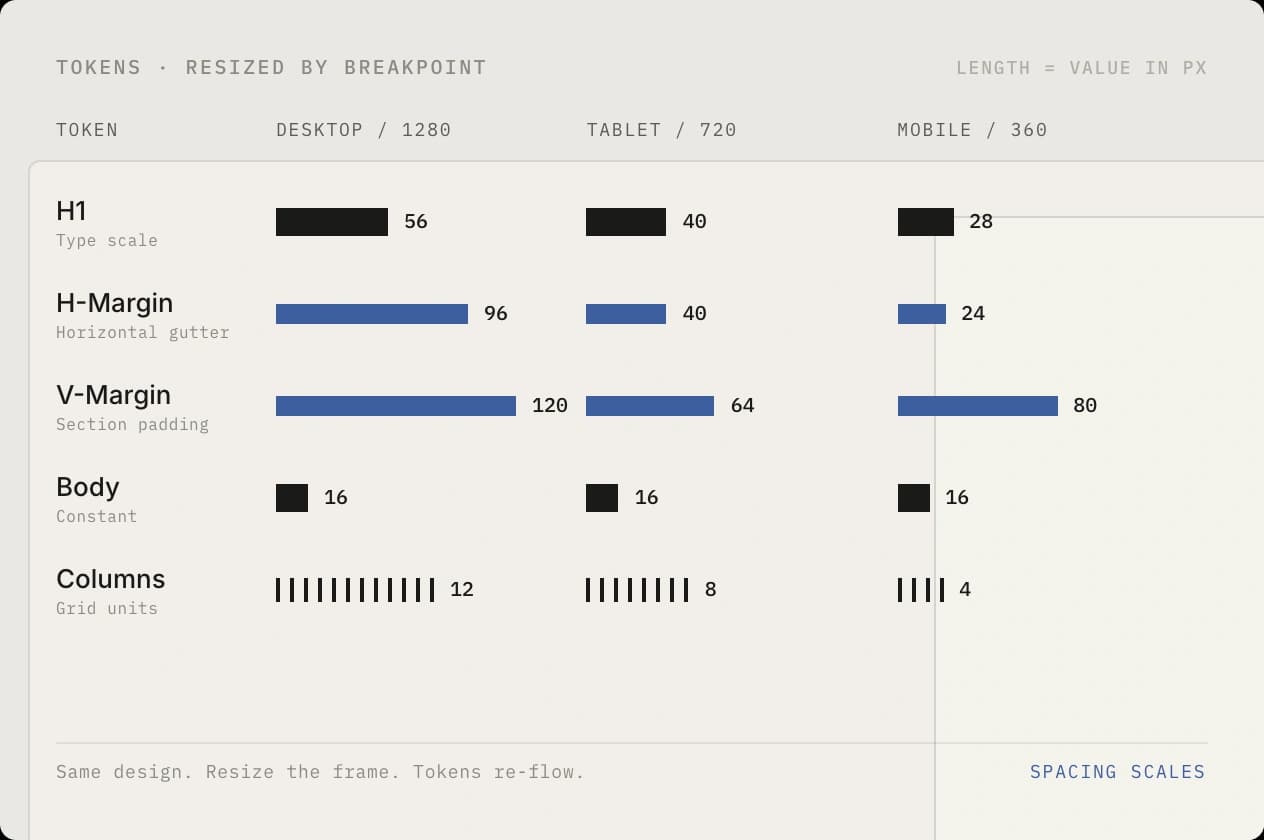
Marketing briefs specified which slices a page should use, and we assembled the page from that selection. Because every slice drew on the same token system — type scale, spacing rhythm, and breakpoints at 1280 / 720 / 360 — a design built once held up at every width without bespoke layout work.
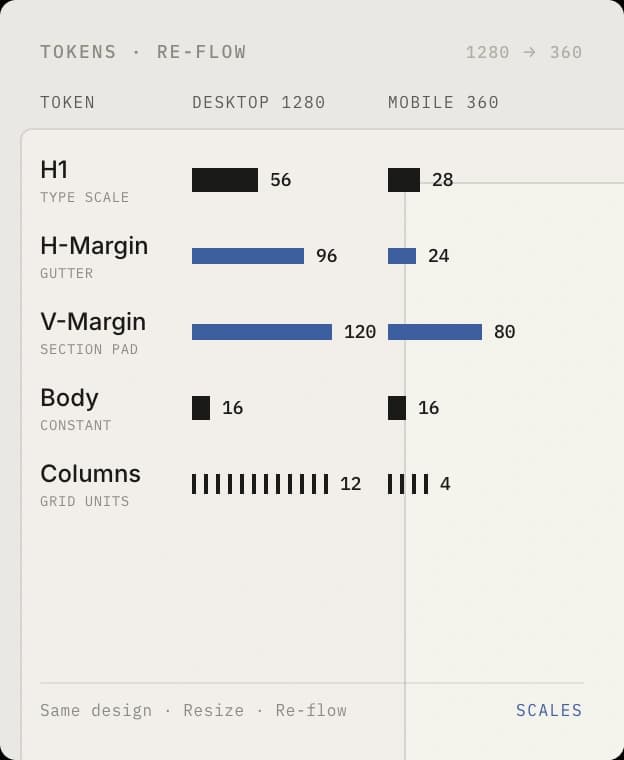
This system connected content, design, and engineering into a single pipeline. Marketing worked inside predefined templates, designers assembled pages from reusable components, and engineers built once and reused across the platform.
Goals, audience, and known templates as reference.
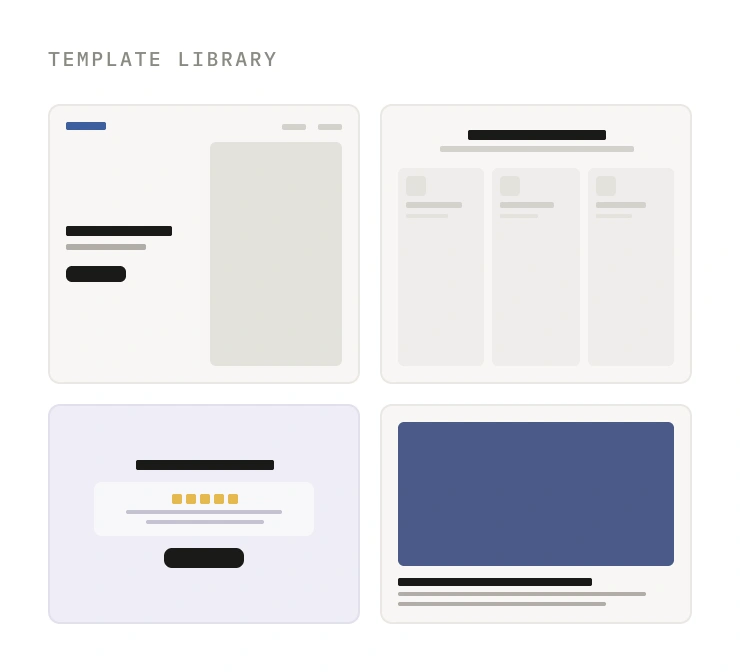
Landing, feature, or pricing. Structure locks in early.
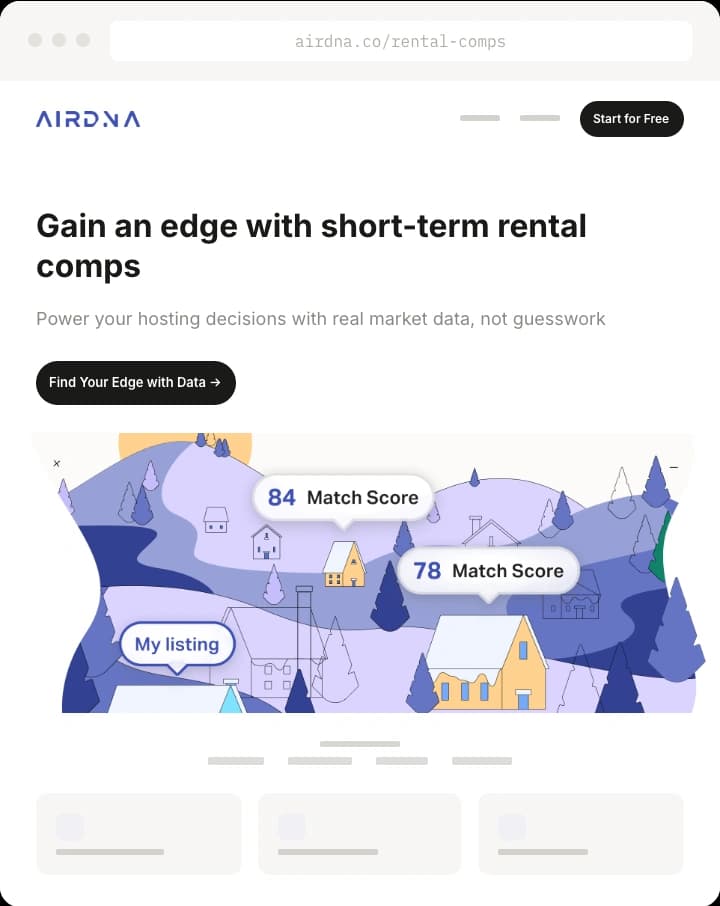
Hero, features, comparisons, CTAs — composed in Paper with tokens applied.
Mapped to Prismic once. Breakpoints handled once. Reused everywhere.
Assembled from slices. Consistent, on-brand, ready to iterate.
Goals, audience, and known templates as reference.
Landing, feature, or pricing. Structure locks in early.
Hero, features, comparisons, CTAs — composed in Paper with tokens applied.
Mapped to Prismic once. Breakpoints handled once. Reused everywhere.
Assembled from slices. Consistent, on-brand, ready to iterate.
The system didn't just speed up page creation — it enabled continuous iteration. With templates and components in place, teams could test and refine pages without redesigning from scratch. Design shifted from building layouts to optimizing performance — focusing on messaging, visual hierarchy, and conversion behavior.
Faster A/B testing, quicker iteration cycles, and a consistent way to evaluate what actually worked.
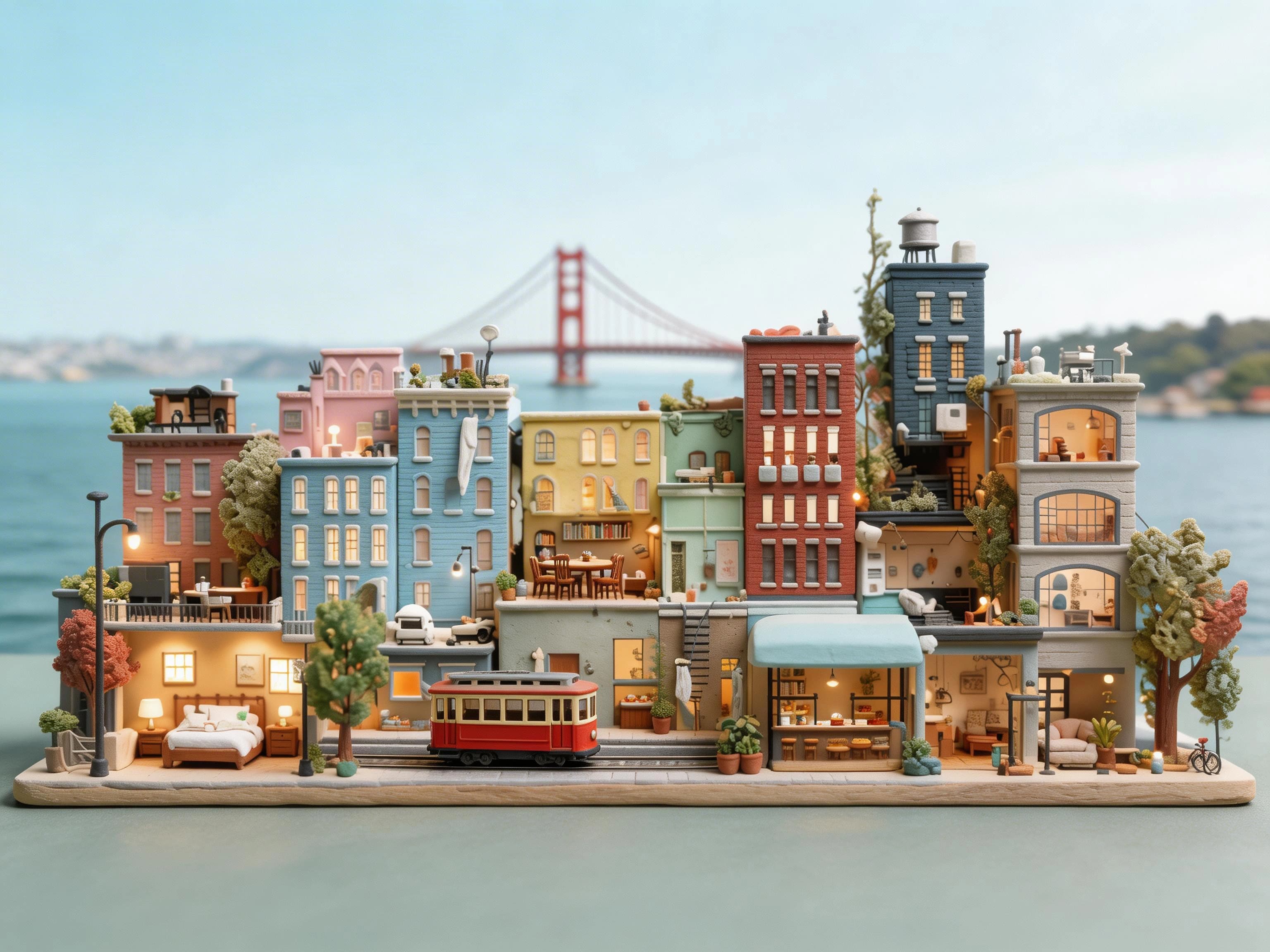

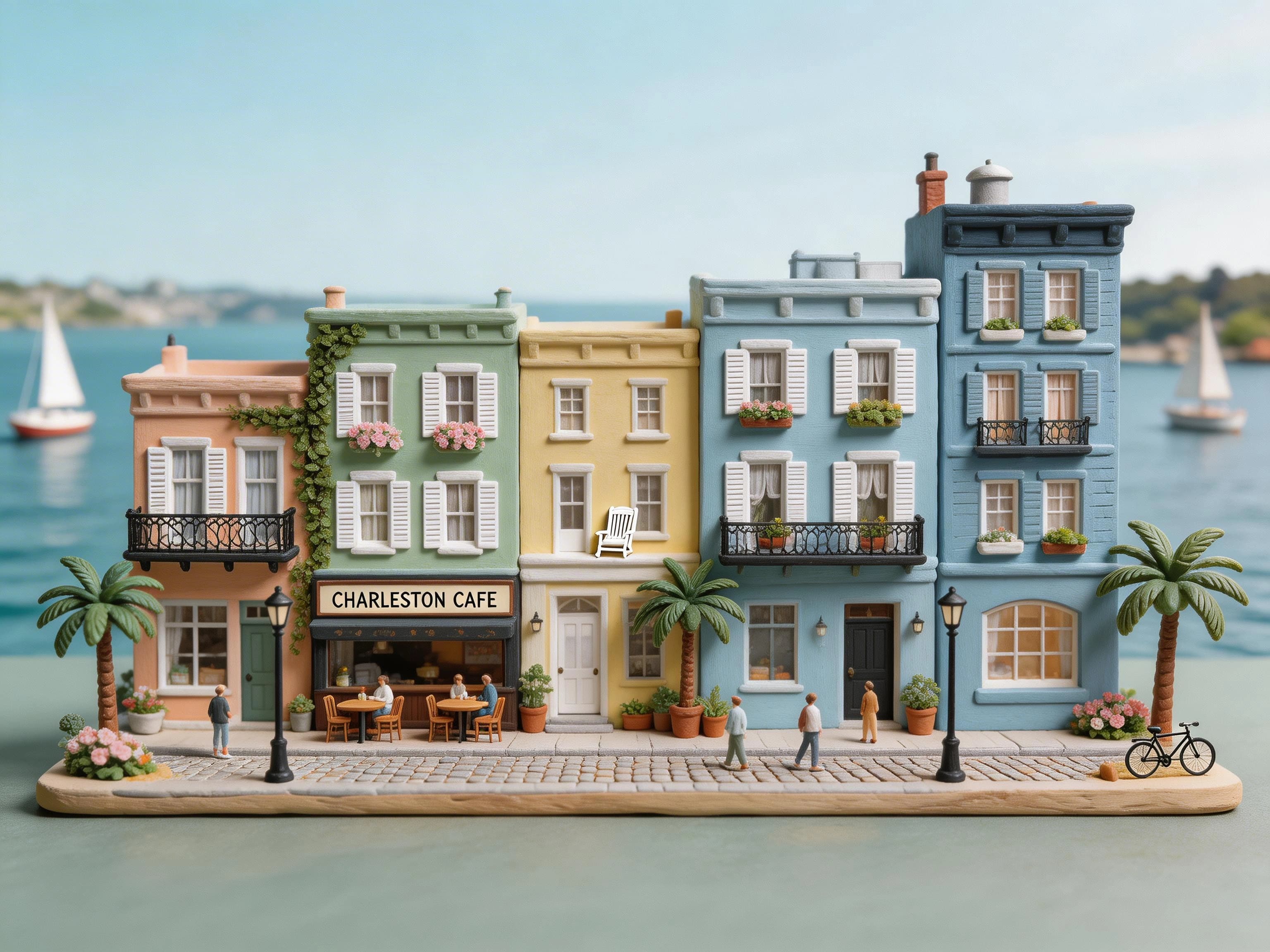
Top-performing homepage hero for 6+ months running.
