UplistingPMS
Visit Site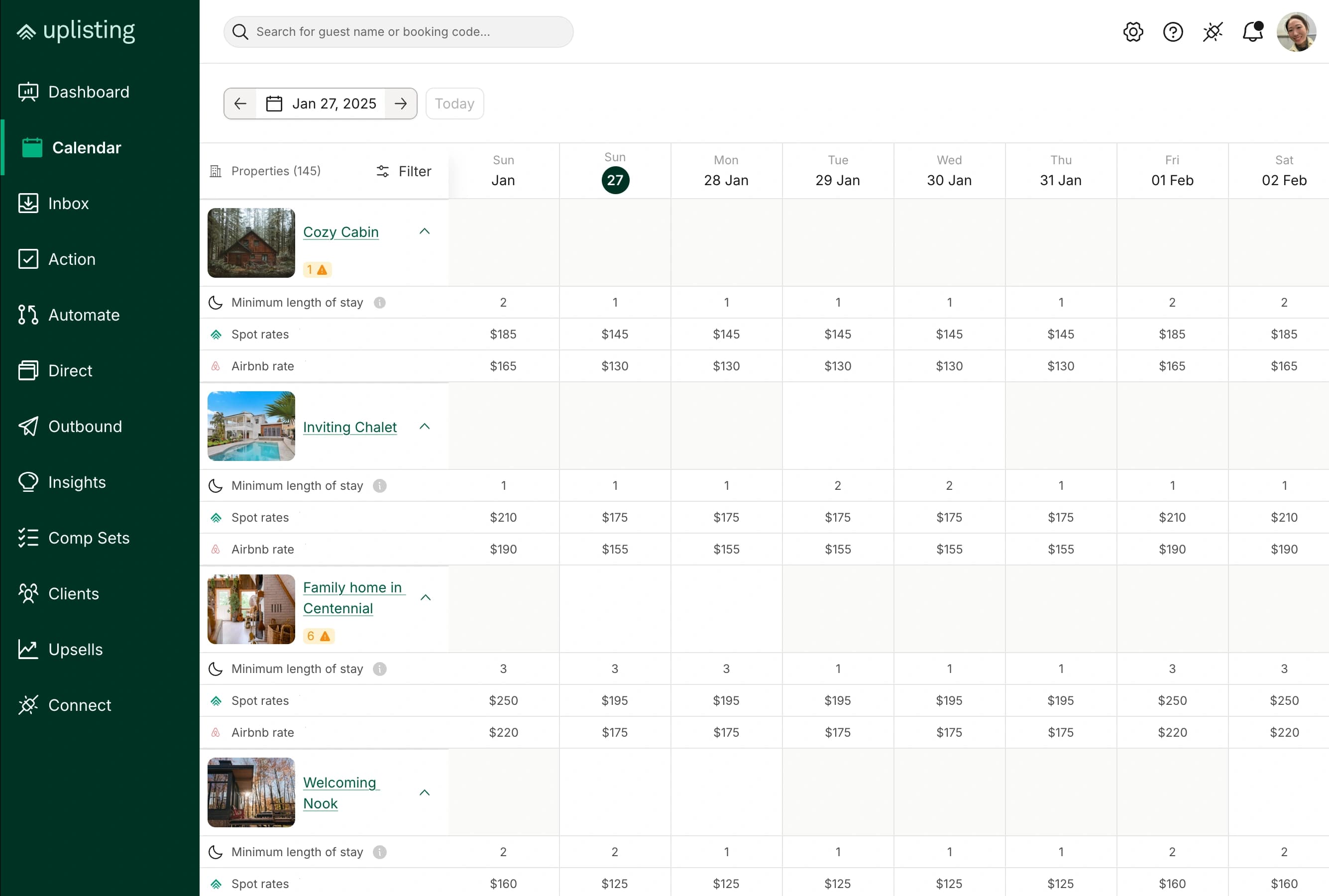
 Alex Johnson $640.00Sarah Poppins $440.00
 Cameron $210.00Martim Santos $350.00Johnathan Torres $1,000.00
 Jeehyun Park $280.00Sam Wise $375.00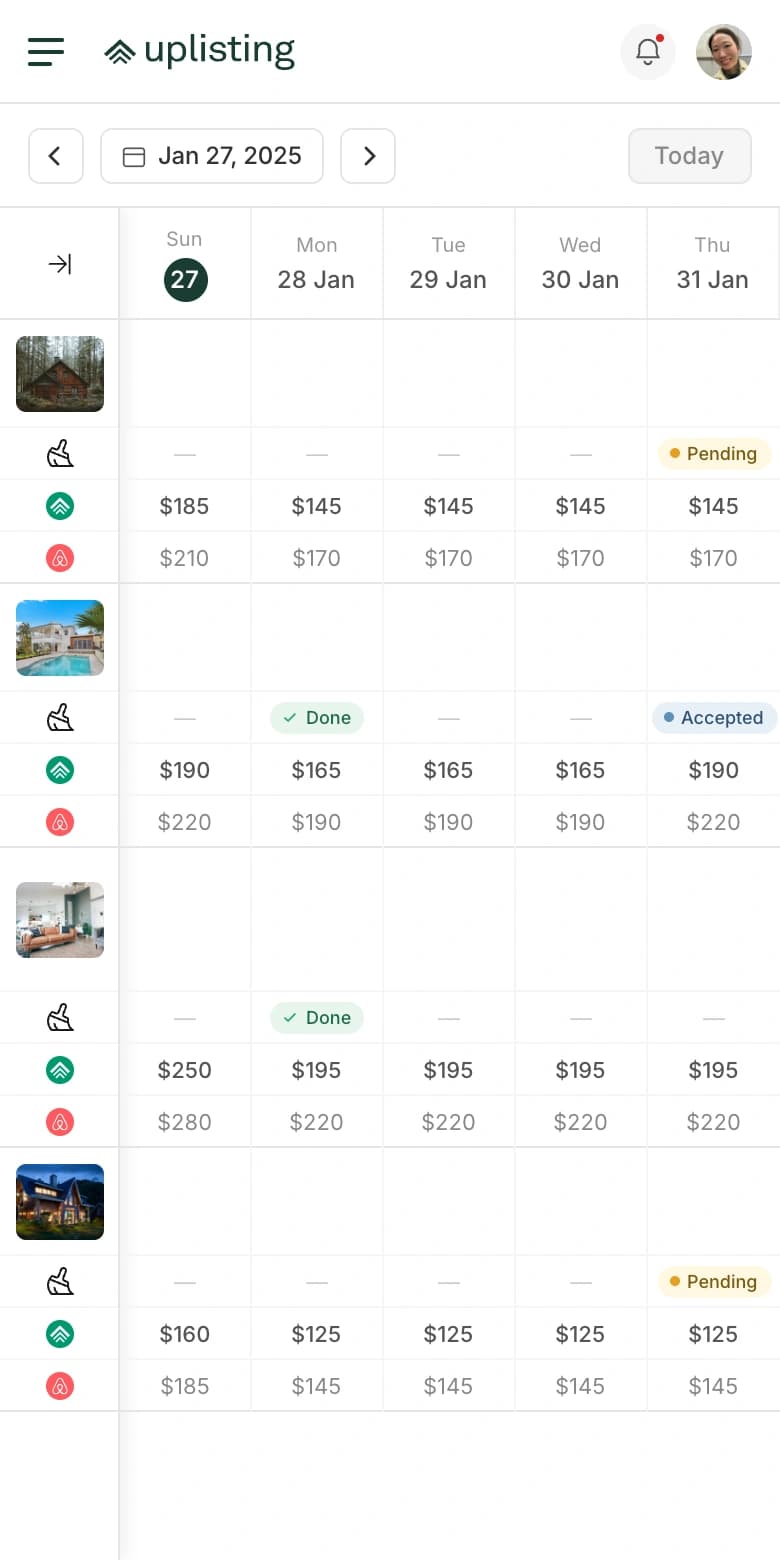
After AirDNA acquired Uplisting, the challenge was to evolve a standalone PMS into a system that could operate inside a broader data platform — while sharpening its core workflows.
As Design Lead, the focus was establishing a scalable design foundation and leading the key product redesigns that followed.
From Standalone to Platform
Before AirDNA, Uplisting ran as a self-contained PMS with its own product logic, design language, and customer base. The acquisition didn't change what property managers came to do with it — it changed the surface it sat on.
The work was to carry Uplisting's identity into a platform that already had one. Two brands and two product shapes had to coexist — connected enough to feel like one company, distinct enough to keep their own users at home.
Establishing the System
Uplisting had shipped for years without a formal design system. Components were copied and forked. Patterns drifted. New features arrived faster than the product could absorb them — and every screen carried the weight of the last person who touched it.
Scaling any further meant building the thing the product had never had: a shared language.
The system gave Uplisting a shared foundation with AirDNA — and room to remain distinct.
We built the foundation from the ground up — tokens for color, type, and spacing; a component library with real coverage; patterns for the parts that repeat. None of it was decorative. Each piece had to earn its place by making a real screen faster to build and easier to live with.
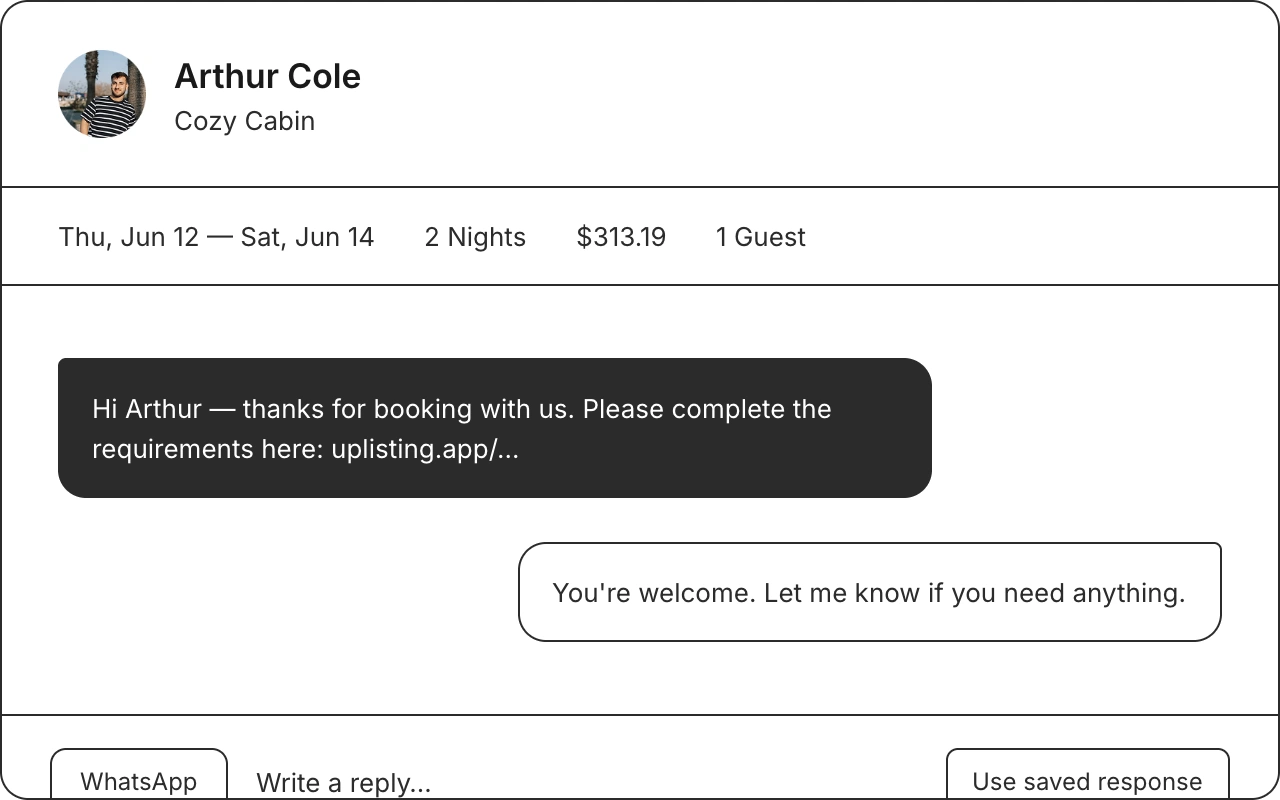
The system showed up quickly in the work: the inbox, automation flows, onboarding, and the calendar itself all moved onto a common set of rails.
Rebuilding the Calendar
The calendar is the surface property managers open first and close last. It's also where the old product showed its age most clearly — a dense week grid, no way to zoom out, competing colors whose meanings were never explained, and modals that stacked on top of each other the moment a booking needed any kind of decision.
Most of the work wasn't adding. It was deciding what to take out.
 Alex JohnsonPending
The redesign leaned on the system. Channel colors earned their meaning back. Reservation pills became a single, legible unit — guest, channel, state — with hover detail instead of nested modals. The grid got a month view, a clearer day view, and a property column that stayed put while the dates scrolled.
What property managers saw every day finally looked like one product — not a decade of patches.